One “family”: weapons multinationals, Defence bureaucracy and the military top brass
Defence shelves 12-month cooling-off period for staff departing for weapons industry and adopts 'bespoke' conflict management strategies in a move likely to facilitate more rapid revolving door moves

The world’s largest weapons maker, Lockheed Martin, has poached its new Australian chief executive directly from the upper echelon of the federal government’s weapons buying group.
The high profile appointment, made in January, continued the US weapons giant’s long-standing practice of recruiting its local chief executives from the senior ranks of Australia’s military and defence officials.
Lockheed Martin told major general Jeremy King late last year that he was in line for its top Australian job, yet King continued to oversee the Defence Department’s multibillion-dollar helicopter contract with Lockheed.
Having accepted the job, mere weeks separated King’s departure from Defence’s Capability Acquisition and Sustainment Group (CASG) and his commencement at Lockheed Martin Australia.
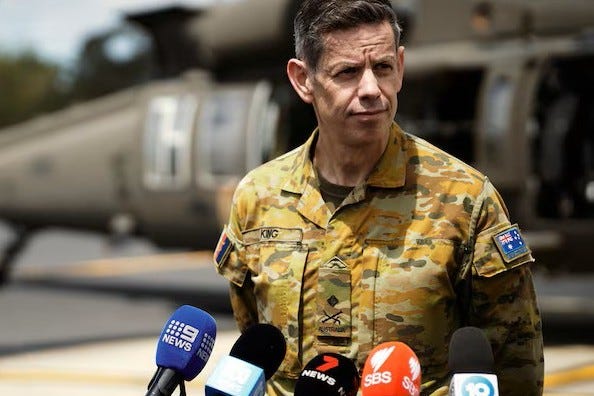
Lockheed Martin’s global revenue in 2024 was US$65 billion ($91 billion), with 91 per cent of that coming from the sale of arms. Its Australian subsidiary has $4.6 billion in current contracts with the Australian Government (source: AusTender, 30.4.26).
As the head of aviation systems in CASG, major general King was responsible for managing Australia’s $2.8 billion contract with Lockheed Martin for the supply of 40 Black Hawk helicopters. Earlier, in 2023, King had played a critical role in Defence’s decision to replace its trouble-plagued Taipan helicopter fleet with the Black Hawks, but he was not the final decision-maker on the deal.
In October last year, King told his boss, Chris Deeble, head of CASG, that he was being considered by Lockheed for the chief executive role. According to the Canberra Times, he also told Deeble that he intended to work with Lockheed Martin’s offer.
However, it wasn’t until early November that King handed the required conflict of interest form to Deeble and was then removed from further involvement in Lockheed Martin’s contractual arrangements with Defence.
In his evidence to Senate Estimates in February, Deeble was vague as to exactly when in October King had advised him of Lockheed’s approach: “within the October time frame”.
In response to a direct question as to when King departed CASG, Deeble again lacked specificity: “at the end of last year”.
Chief of Army Simon Stuart was more forthcoming on the military side, stating that King had ceased his full-time service with the Australian Army on 5 January.
Having employed the well-worn delaying tactic of taking the question ‘on notice’ during a senate hearing, the Defence Department later revealed that King had departed CASG on 5 January as well.
The department did not respond to my questions as to precisely when in October King advised Deeble of Lockheed’s approach, nor when in November King submitted the required conflict of interest forms.
On 12 January, just one week after King had quit the public service, Lockheed Martin Australia announced that he was its next chief executive.
Senior military officers working in the upper echelon of the defence department’s arms buying group regularly pass through the revolving door into a post-military career in the weapons industry. The Australian arms industry revolving door database that I have been researching and compiling contains numerous examples, including Jeremy King and Chris Deeble.
King’s new boss, president of Lockheed Martin International, Jay Pitman, said: “Jeremy’s exceptional depth of experience in large-scale defence acquisitions, combined with his long-standing commitment to customer-centric leadership, make him the ideal candidate to drive Lockheed Martin’s growth in Australia and New Zealand.”
Also quoted in Lockheed’s media release was King: “I am eager to leverage my extensive program leadership experience and commitment to customer success in leading Lockheed Martin’s efforts in Australia and New Zealand.”
The Australian Public Service code of conduct is clear about the risks of public servants moving too rapidly into the private sector: they may use inside knowledge and contacts to benefit their new employer in influencing government, and they may use or reveal confidential or sensitive information that advantages their employer in dealing with government or the market generally.

The Defence Department had a longstanding rule requiring a 12-month gap between its officials leaving public service and joining the private sector in a related industry position (cooling-off period) to help mitigate such risks.
This timeframe was already insufficient for the risk-mitigation task – given that many defence procurement programs extend over many years and some of the largest can take a decade or more to finalise – yet no cooling off period at all was applied by Defence to buffer major general King’s transfer to Lockheed Martin.
Multiple objections to the lack of cooling-off period expressed by Greens’ senator David Shoebridge during Senate Estimates were swept aside, or ignored, by all officials present, from the Chief of the Defence Force (CDF) Admiral David Johnston down. No-one answered Shoebridge’s repeated question as to whether anyone in Defence had formally approved King’s move to Lockheed. Nor did Army Chief Simon Stuart or the CDF answer Shoebridge’s repeated question as to whether a cooling-off period still applies to Defence revolving door moves more generally.
Indeed, the remarks from both military leaders made it plain that as long as Defence’s claimed “clear policies” on managing conflicts of interest are adhered to, there is no longer any impediment to a speedy transition into the arms industry for senior Defence officials.
Defence did not respond to questions as to whether, and if so when, the 12-month rule has been scrapped. Further investigation revealed that this longstanding rule has been scrapped by Defence.
In a written question on notice following King’s departure, Senator Shoebridge asked Defence how often it had waived the 12-month rule in the past five years.
Defence responded (bold added):
Defence’s post-separation employment conflicts of interest policy requires Defence personnel to declare any offer of post-separation employment with a prospective employer that provides goods or services to Defence…[that] may give rise to a conflict of interest (actual or perceived), as soon as practicable and before accepting the offer.
A post-separation conflict of interest declaration enables Defence to implement bespoke and proportionate management strategies, which may include restrictions, to mitigate any conflict of interest risks associated with a prospective employment opportunity.
The weapons industry is recognised globally as a very high risk industry for corruption. When asked by Shoebridge during Senate Estimates how the Defence Department had ensured Lockheed Martin managed its side of the obvious conflicts of interest inherent in hiring King, a Defence probity official said the weapons giant had provided a letter of undertaking outlining what it intends to do.
What wasn’t explained, or even mentioned, was how Defence intends to ensure Lockheed adheres to its undertakings.
The department did not respond to a request from Undue Influence for a copy of Defence’s “clear policies” on managing conflicts and a copy of Lockheed Martin’s letter of undertaking. Whether its policies are “clear” and sufficiently robust could not be independently determined.
Defence’s repeated refusal to respond to legitimate questions and requests marks an expansion of this powerful department’s unwarranted secrecy on matters of public interest that have nothing to do with national security and much more to do with its desire to deflect any scrutiny of its governance standards.
10 years on, nothing has changed
Just as the Defence hierarchy welcomed the departure to Lockheed Martin, 10 years ago, of its senior defence scientist Tony Lindsay – who joined Lockheed one day after he left his senior public service post – the Defence leadership today continues to see no reason for concern about the rapid-fire revolving door moves of its senior staff into leadership roles in the weapons industry.
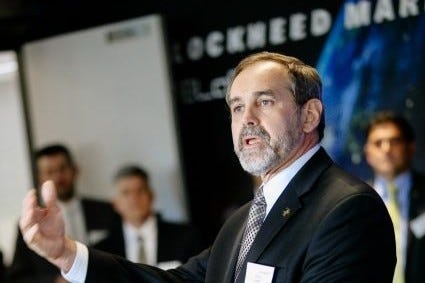

In fact, CDF David Johnston welcomed major general King’s move, telling Senate Estimates that King’s expeditious move to the private sector was to Australia’s benefit.
Major general King (retired) has extensive experience brought over his career, not just the latter part of it. Moving to defence industry to allow an individual of that calibre to continue to contribute to our nation is to our benefit.
Greens senator David Shoebridge was having none of it: “Contribute to our nation? He’s contributing to Lockheed Martin, a foreign defence contractor and the world’s biggest arms manufacturer.”
Shoebridge:
When members of the public look at this and they see someone who has been …responsible for making decisions about multibillion-dollar contracts with Lockheed Martin, managing multibillion-dollar contracts with Lockheed Martin, and see someone step out of that from the uniform and in less than a week take a job with Lockheed Martin, that doesn’t just miss the pub test, that brings Defence into disrepute, the Public Service into disrepute. They see people leveraging their very recent experience to maximise corporate profits in this case for the world’s biggest weapons manufacturer. Don’t you see how this looks to the public and see how this kind of behaviour stinks…?
That the top echelon of Defence remains blind to the obvious ways in which its facilitation of the revolving door can work against Australia’s national interest points to the significant degree of capture of this big-spending department by the weapons industry.
Chris Deeble, the nation’s chief arms buyer
The man responsible for reviewing both of King’s conflict of interest declarations and Lockheed Martin’s undertakings regarding the management of those conflicts was Chris Deeble, himself no stranger to the revolving door.
As part of his 37-year career with the Royal Australian Air Force, Deeble spent the last decade or so of his time in the military managing complex multibillion dollar procurement programs inside Defence’s weapons buying agency. In 2016, he moved from Defence to Airservices Australia to work in collaboration with Thales on the ambitious (and perennially ‘troubled’) OneSKY project, which aims to unify Australia’s civil and military air traffic management systems.
In 2019, Deeble was wooed by the world’s third largest weapons-maker, US-based Northrop Grumman. Deeble agreed to head its Australian subsidiary, a job he held for more than three years. Northrop Grumman is deeply involved in the US government’s nuclear weapons program, amongst many other defence programs, including the Triton drone and the nuclear-capable B-21 stealth bomber.
In mid-2022, Defence was looking for a new head of CASG. Deeble got the job. Inside a month of leaving Northrop Grumman, he was back inside Defence as the nation’s top arms buyer, appointed by the Albanese government in August 2022.
When asked by Senator Shoebridge whether anybody had to sign off on King’s plan of “literally going from gamekeeper to poacher in less than a week”, and whether Deeble himself had approved King’s move to Lockheed, Deeble did not answer either question. Instead he said:
I reviewed the conflict of interest. I also reviewed the agreement with Lockheed Martin with respect to major general (retired) Jeremy King recusing himself from any of the projects that had been under his management in the past… Any of the projects in which he had a role to play as the head of Joint Aerospace Systems he is recused from for 12 months.
Staying “in the family”
King posted Lockheed Martin’s announcement of his appointment to his LinkedIn feed and received many enthusiastic posts in response.
Two stood out.
The first, posted by Gabby Costigan MBE, the former CEO of Australia’s largest defence contractor, BAE Systems Australia, and herself a former army officer, said the quiet part out loud:
So excited to welcome an old friend to Defence Industry and really pleased for Jeremy King to take on the CEO for LMA. 🕺🤩🥳 A big loss for Army and Defence losing Jez but he has stayed in the family.” (Bold added.)
Costigan was CEO of BAE Systems Australia when it won the (then) $35 billion Future Frigates contract in 2018 (which has now blown out to almost double that, at $65 billion). Following the big win, Costigan was awarded an MBE by the British government, “For services to UK/Australia relations”. She has since moved to London and now works in BAE Systems’ global headquarters as group managing director of business development.
The second post was notable because it was the only critical voice among the chorus of congratulations:
“Nothing questionable about hiring a former government decision maker on defense acquisitions to a high paid LM position,” said Dale Wolf, a retired 42-year former employee of Lockheed Martin Aeronautics. “Nothing to see here folks.”
Auditor general’s revolving door concerns
The nation’s auditor general has repeatedly warned of the corroding influence of the revolving door, which leads to cosy, familial relationships between the Defence hierarchy and the weapons multinationals.
In evidence to parliament’s audit committee in November 2024, deputy auditor general Rona Mellor warned of the importance of keeping an “appropriate distance in our relationships” with multinational weapons contractors.
“There’s a really big challenge ahead for Defence. The biggest challenge … is that there is a culture in these very long-term contracts… There’s a real risk that you get captured by the provider.”
She said the audit office had “ongoing concern” about Defence’s implementation of the audit office’s recommendations, particularly for long-term contracts involving so-called “strategic partners”.
Mellor was forthright about the use of such language by government and industry:
One of the big issues is this…nomenclature of ‘strategic partnership’. You’re actually not in partnership. You have a contract… you need to hold them to account.
While Mellor was commenting on a Thales munitions contract, she also noted: “Next week we’ll go into the shipbuilding group and we’ll see the same thing, or the week after we’ll go into the Air Force and see the same thing.”

The mega-spend AUKUS era makes stopping the revolving door urgent
Australian governments have long been susceptible to the revolving door process in which politicians, the military, and public servants move effortlessly between government, lobbying firms, and the arms industry. The movement of King to Lockheed Martin is more of the same behaviour that’s been occurring for decades.
No suggestion is being made of unlawful activity by any person named in this article, nor is it alleged that any of the appointments described were unlawful. The problem for Australia is not one of illegality but of the perfectly legal undue influence of industry insiders within government, the lack of transparency, and the absence of management of the revolving door.
Although such moves are not illegal, they nevertheless demand a robust management framework—with rules that are enforced—to mitigate the inherent conflicts of interest.
Australia’s limp attempts at managing the revolving door have been completely ineffective, particularly in the Defence/arms industry domain. The arrival of AUKUS requires this unregulated and unmonitored democracy-eroding phenomenon to be brought under control.
This article was first published by Arena Quarterly No 26 on 17.6.26